




The U of R is at the heart of Saskatchewan’s nuclear future
As Saskatchewan moves toward developing zero-emission nuclear power through small modular reactors (SMRs), the need for homegrown research capacity, specialized training, and innovation has never been clearer.
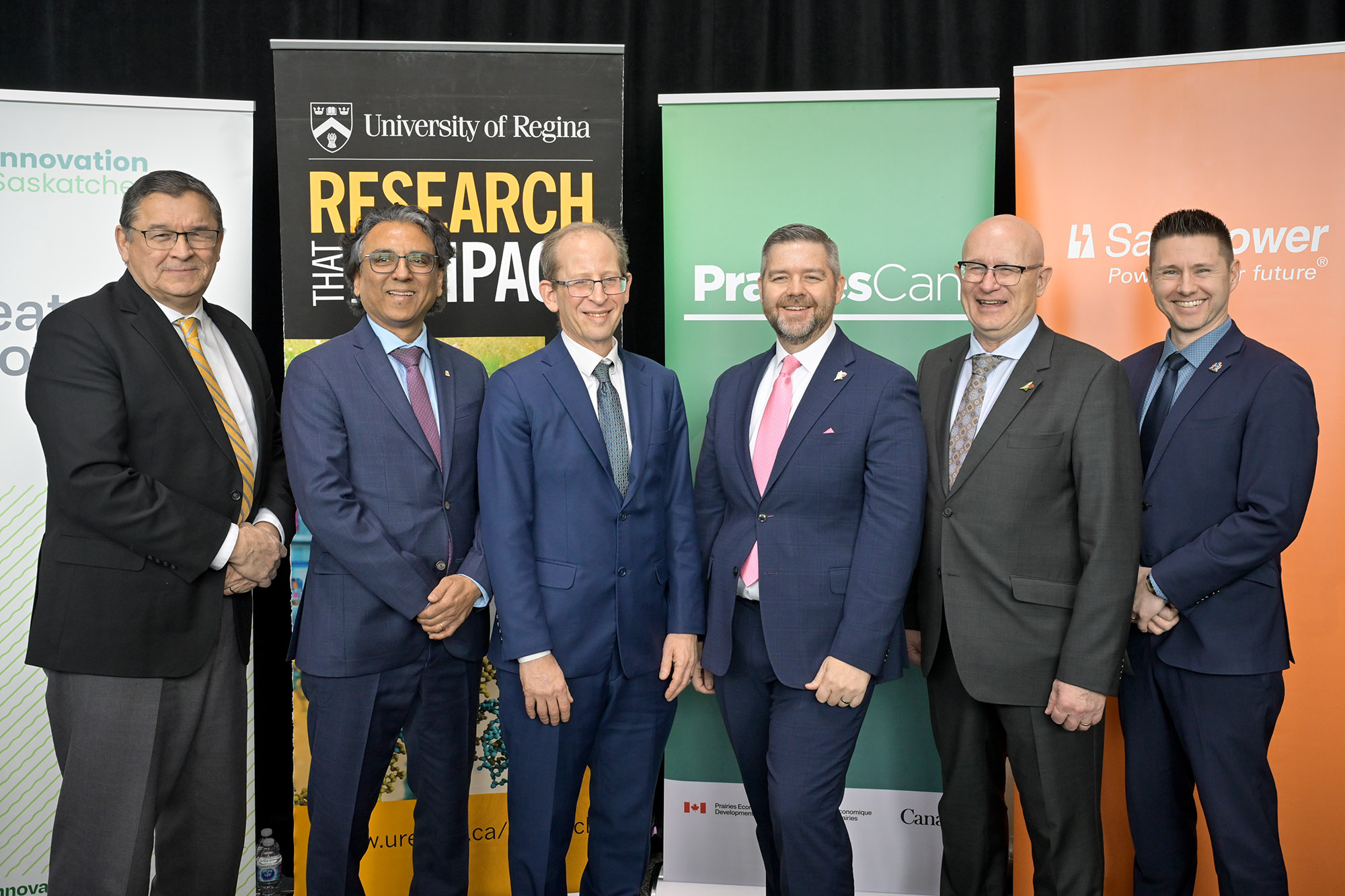
New funding and support announced on January 19, 2026, will create the Small Modular Reactor – Safety, Licensing and Testing (SMR-SLT) Centre at the University of Regina, with investments from SaskPower, Prairies Economic Development Canada, Innovation Saskatchewan, and support from Canadian Nuclear Laboratory. The Centre will help lay the foundation for Saskatchewan to become a global player in water-cooled SMR development.
“The Testing Centre will help to further establish Saskatchewan as a hub for nuclear excellence, advancing nuclear research, and supporting a local nuclear workforce and supply chain,” says Jeremy Harrison, Minister Responsible for SaskPower. “Nuclear power is central to our Government’s energy security strategy, which is why we are making the necessary investments to support industry readiness in the province.”
A turning point for Saskatchewan’s energy future
Saskatchewan’s transition toward nuclear energy is closely tied to Canada’s climate commitments and Western Canada’s growing demand for safe, reliable, low-emissions, non-weather-dependent power that uses Saskatchewan fuel.
The Saskatchewan Growth Plan identifies SMR development as a core priority, and the SMR-SLT Centre reflects how seriously both the province, and the University of Regina are taking that commitment.
Dr. Jeff Keshen, University of Regina President and Vice-Chancellor, says he is thrilled by today’s announcement.
“This new centre places our university at the heart of the province’s nuclear sector and positions us as a leader in SMR safety, licensing, and training in Western Canada,” says Keshen. “Through strong partnerships, we are advancing nuclear research while training the next generation of highly skilled professionals who will help shape Saskatchewan’s clean-energy future.”
Why safety comes first
At the heart of this work is Dr. Arthur Situm, Canada Research Chair in Small Modular Reactor Safety and Licensing, whose leadership is expanding the University of Regina’s nuclear research capacity at a pivotal moment for the province.
Situm says Canada’s nuclear sector is among the most highly regulated in the world and maintaining that standard is essential to public trust and long-term success. “At the University of Regina, safety is not an add-on to nuclear research – it is foundational. That focus is embedded in the design of the SMR-SLT Centre and in the research programs it will support,” he says.
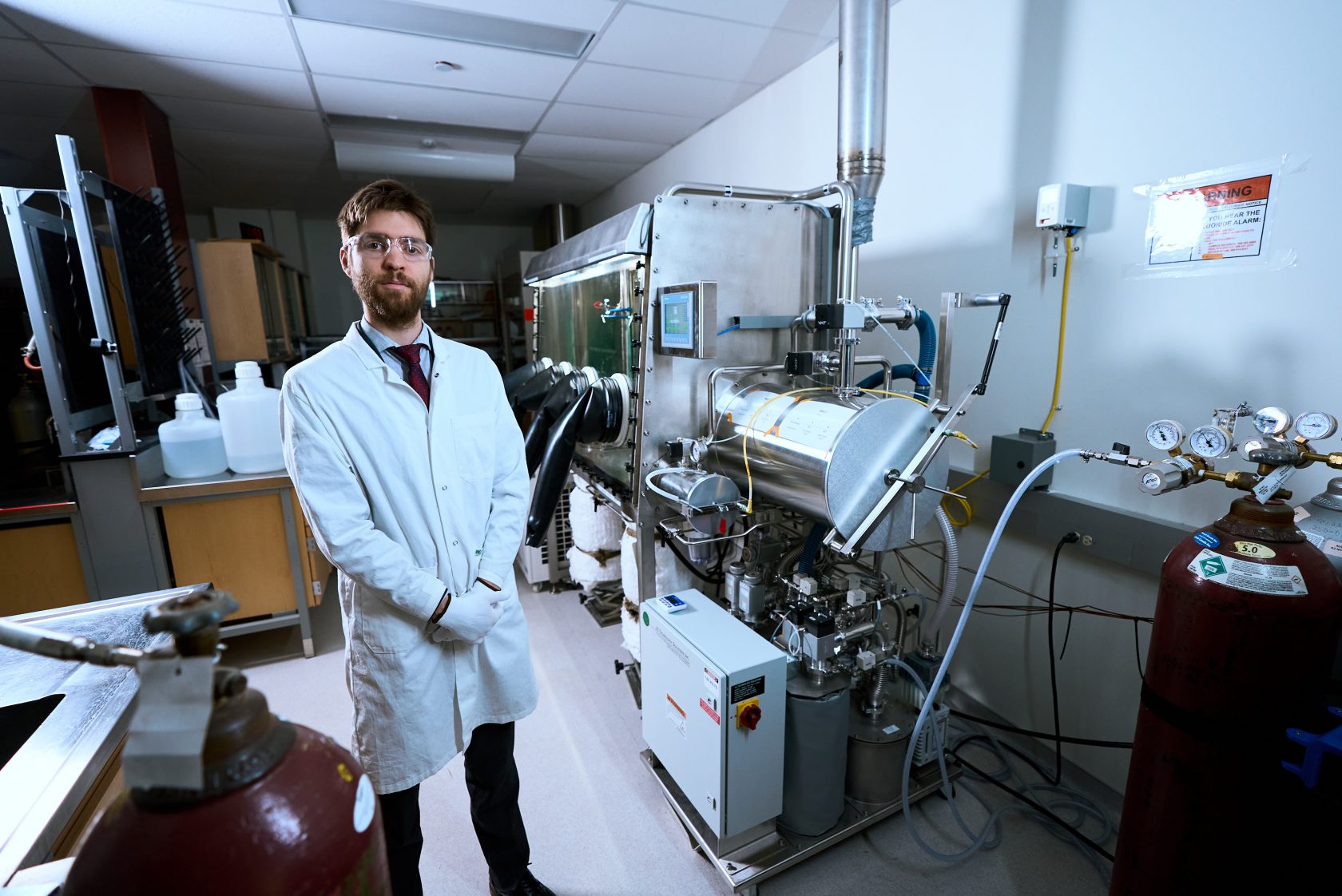
A cornerstone of the new centre is a set of advanced nuclear test loops, which are highly controlled systems that replicate conditions inside an SMR. The test loops allow researchers, students, and industry partners to safely study how reactor components perform over time and to refine technologies before they are deployed.
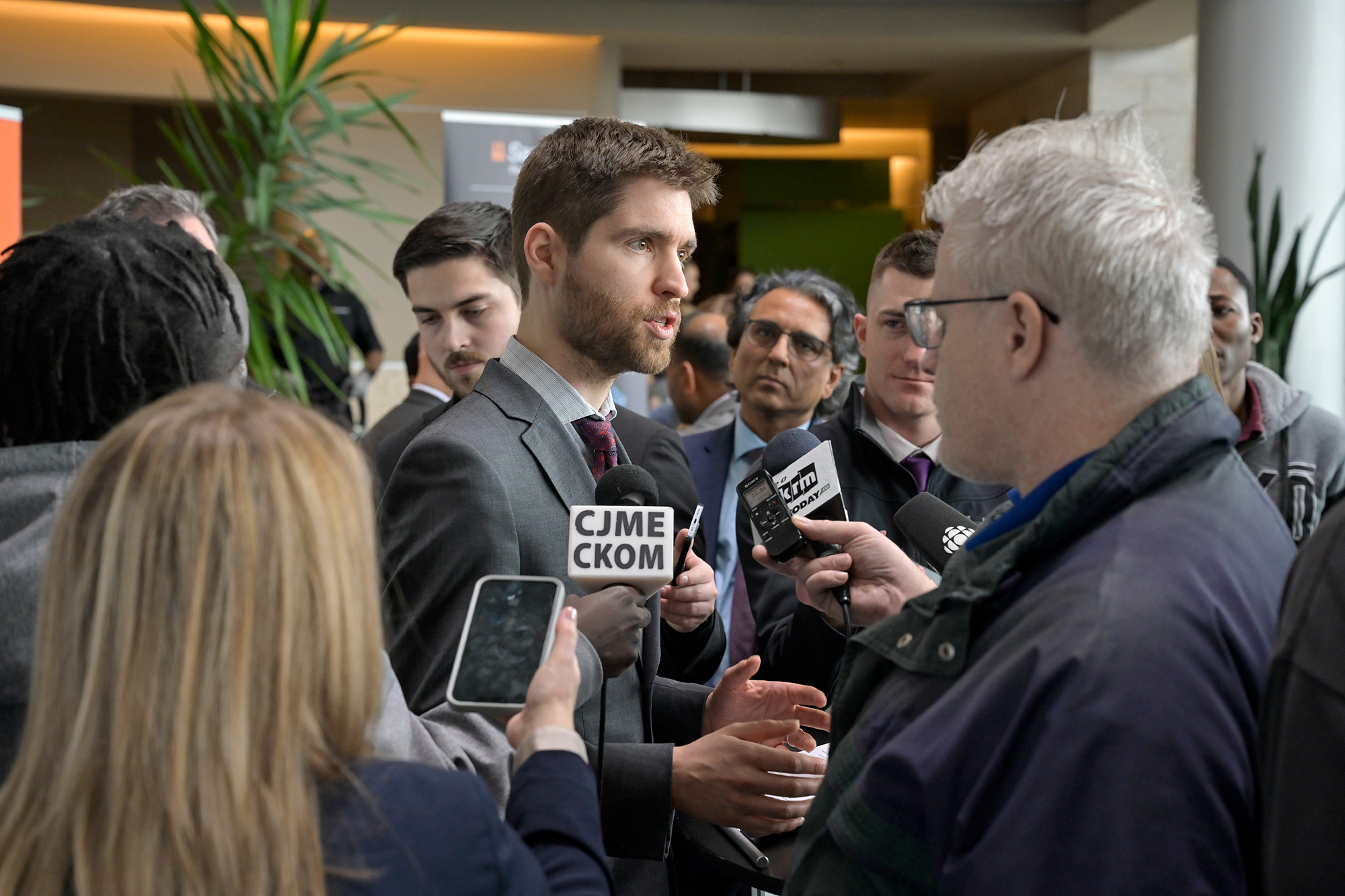
“Our test loops will simulate everything from corrosion inside boiling and pressurized water reactors to natural, pump-free heat circulation. This work will support safety research, workforce training, and future SMR licensing in Canada and beyond,” says Situm.
The Honourable Eleanor Olszewksi, Minister of Emergency Management and Community Resilience and Minister responsible for Prairies Economic Development Canada, says Saskatchewan has long been an energy leader.
“Small modular reactors are the next step in that leadership — delivering reliable, affordable, and low-emission power while positioning Canada to be an energy superpower in a changing world,” says Olszewksi. “This investment in the University of Regina’s Small Modular Reactor Safety, Licensing and Testing Centre will create new opportunities for Saskatchewan researchers and businesses, advance Canada’s nuclear expertise, and help build a resilient energy future for generations to come.”
Research and training that work together
The SMR-SLT Centre will support nuclear research at the University focused on advancing reactor technology, improving fuel and materials safety, addressing long-term fuel disposal, and supporting emergency cooling research and SMR licensing in Canada and internationally.
Researchers are also examining public perceptions of nuclear energy and governance pathways needed to support Saskatchewan’s clean-energy transition, recognizing that successful SMR development depends on both technology and public trust.
“Nuclear power generation will play a significant role in providing safe and reliable power to our customers in the coming decades,” says Rupen Pandya, SaskPower President and CEO. “Investments such as the Testing Centre will help to attract and develop the talent we need to help make that a reality.”
Through the Centre, students, researchers, and industry collaborators will gain hands-on experience with systems used in the nuclear industry, experience that will help Saskatchewan build and retain a nuclear-ready workforce and support a competitive local supply chain.
Built on collaboration
The SMR-SLT Centre builds on the University of Regina’s existing collaborations with national and international experts in SMR design, safety research, and training, including the University’s valuable partnership with Canadian Nuclear Labs (CNL). CNL is providing a large portion of the design of the SMR-SLT, as well as preparing for future projects with the facility to advance SMR development in Canada. This collaborative approach also aligns with the Global Institute for Energy, Minerals and Society (GIEMS).
GIEMS is a province-wide initiative involving the University of Regina, the University of Saskatchewan, and Saskatchewan Polytechnic, designed to coordinate energy research, policy expertise, and industry collaboration, and to ensure shared access to facilities like the test loops.
“Saskatchewan’s world-class research community is driving innovation with global impact,” says Warren Kaeding, Minister Responsible for Innovation Saskatchewan. “The SMR Testing Centre with strengthen partnerships between academia, industry, and government, elevating Canada’s leadership in energy research and nuclear technology solutions.”
Situm says the Centre positions the University of Regina at the heart of Saskatchewan’s emerging nuclear sector. “This facility allows us to turn research into real-world readiness, strengthening the safety, training, and regulatory expertise needed to support the next generation of nuclear energy.”
Check out the video below to hear more about Situm’s work:
Draining Prairie wetlands
New study warns Prairie wetland drainage is increasing Canada’s carbon footprint
Read More
Water, waste, and antimicrobial resistance
Innovation Saskatchewan funding boosts U of R research
Read More