
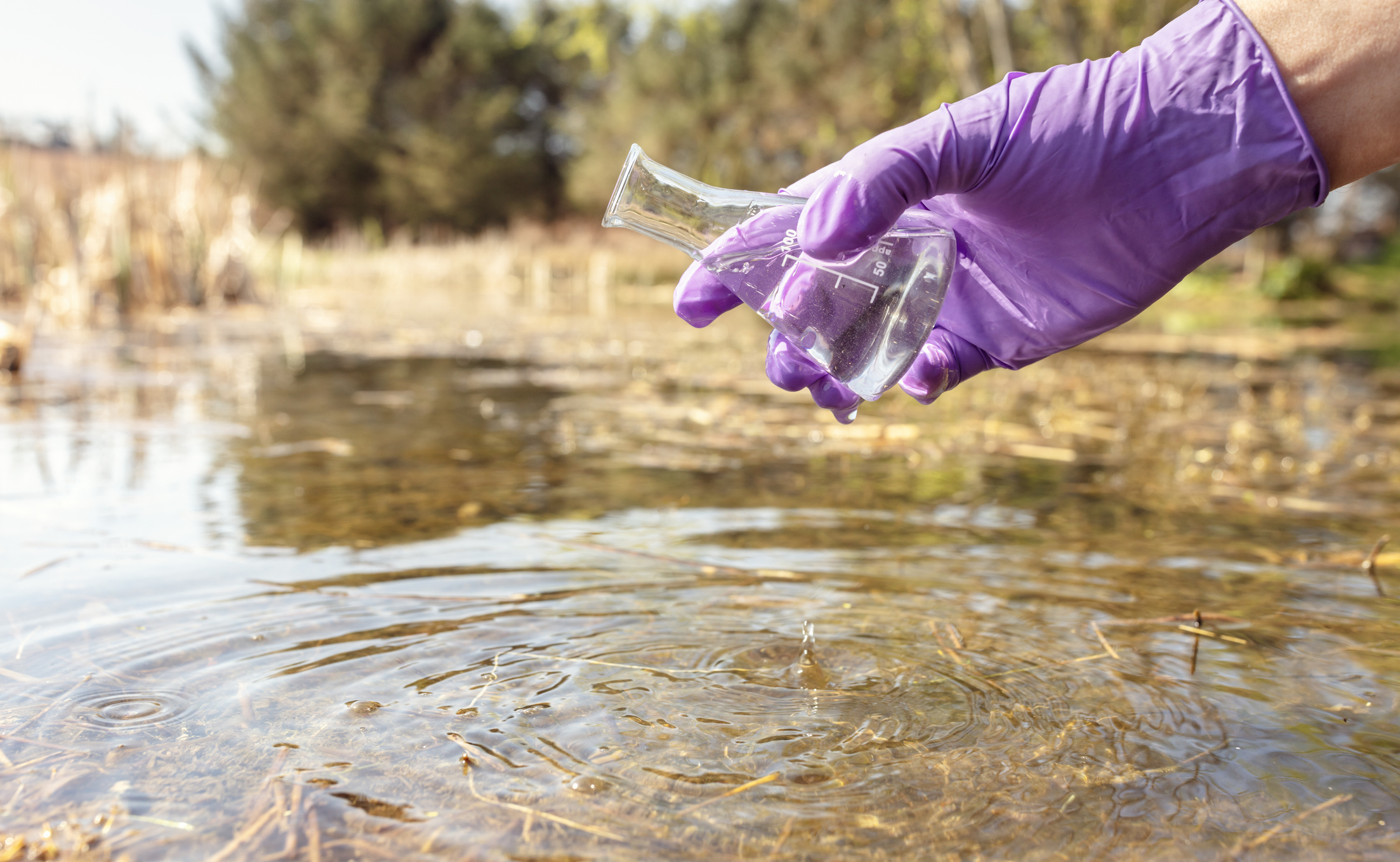





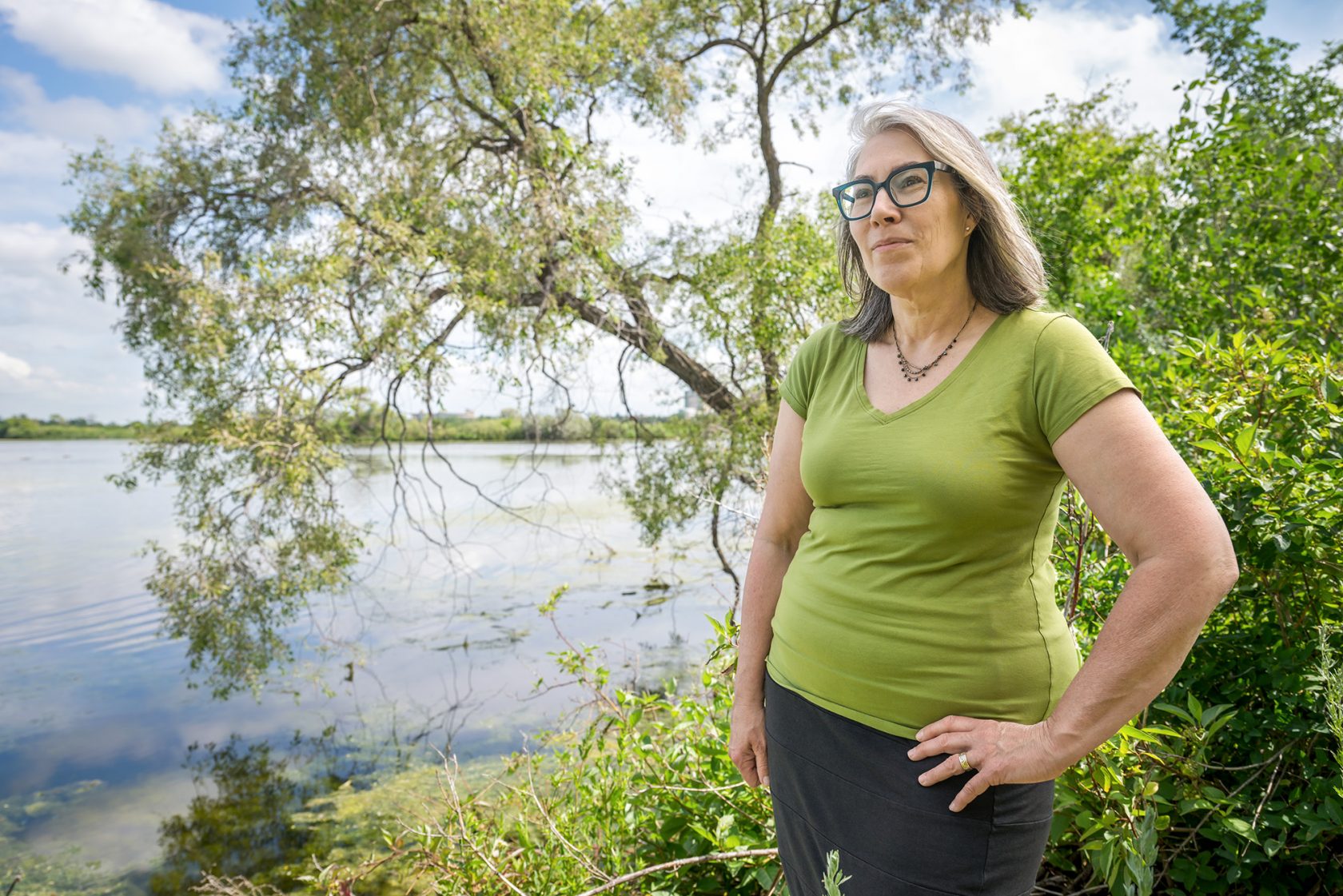
Dr. Britt Hall is examining what happens to various forms of mercury as wetlands dry out because of climate change or human removal. (Photo by Trevor Hopkin)
From particles that make up the atomic nucleus to Prairie wetlands that are drying up, new federal funding supports University of Regina researchers as they pursue questions that impact environmental protection, scientific discovery, and train the next generation of researchers.
The University received close to $3 million in funding for 14 projects through the Natural Sciences and Engineering Research Council’s (NSERC) Discovery Grants program, which supports long-term, curiosity-driven research across the country.
For U of R biology professor Dr. Britt Hall, the work begins in the millions of wetland ponds found throughout the Great Plains of North America.
“Prairie wetland ponds offer incredibly valuable ecological services,” says Hall, who received $220,000 over five years for her project entitled Determining environmental controls on mercury transformation and emissions in vulnerable Canadian Prairie wetland ponds. “Wetlands store water during droughts and reduce flooding during wet periods. They store carbon and other nutrients, so they are important in maintaining water quality.”
The ponds are also rich wildlife habitat, providing food and other resources for large numbers of migrating birds and other animals. But prairie wetlands also receive mercury, a toxic metal released into the atmosphere primarily through coal burning.
Hall’s research team is examining how mercury changes into different compounds in these important ecosystems, particularly as wetlands dry out because of climate change or human removal.
“Previous research has shown that these sites can have elevated concentrations of methylmercury, the most toxic form of mercury in fish,” says Hall. “We are examining what happens to various forms of mercury when the wetlands dry up.”
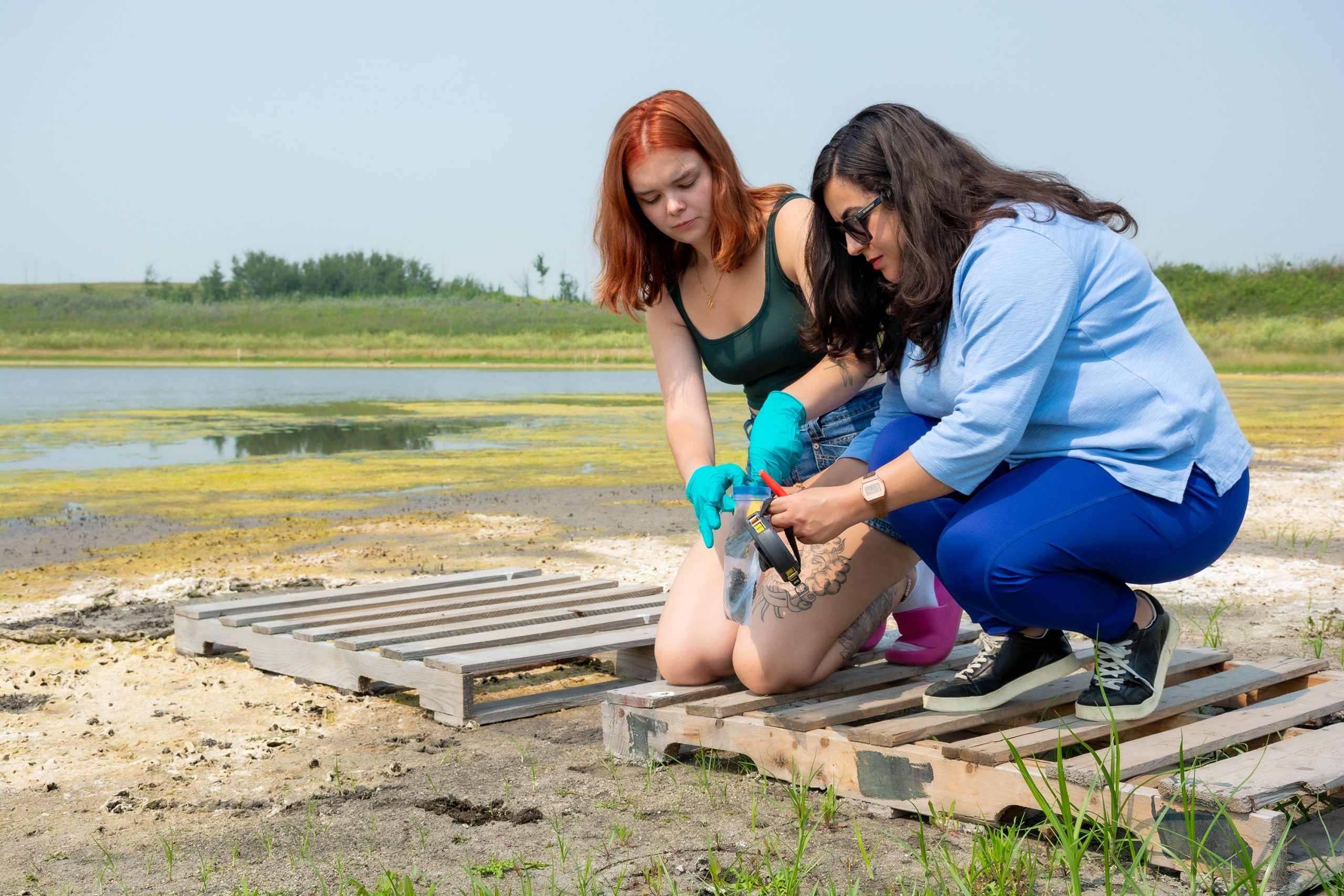
Graduate students, Olivia Garratt and Maryam Dehghanian collecting soil samples that will inform environmental controls on mercury emissions near wetland ponds on agricultural land in Saskatchewan. (Photo by Emma Shogren)
Her team’s working hypothesis is that as wetland ponds dry, mercury stored in the sediments changes form and is released into the atmosphere. This move could shift wetlands from places where mercury is stored to systems that become sources of mercury pollution.
The project will provide the first region-wide estimate of mercury emissions from the Canadian Prairie Pothole Region, which covers approximately 520,000 square kilometres, or about five per cent of Canada’s total land mass.
“Canada is a party to the Minamata Convention on Mercury, an international treaty that seeks to reduce emissions of toxic mercury worldwide,” says Hall. “Our work will directly support Canada’s obligations of research and monitoring under the convention.”
Fieldwork will take place at the team’s long-term sampling location at St. Denis National Wildlife Area, as well as on private agricultural lands.
A new PhD student, Meghan Black, will begin in September and measure active mercury emissions using dynamic flux chambers along water and sediment transects as ponds dry. She will connect those measurements to other important characteristics of the ecosystem.
“The fieldwork is going to be fun,” says Hall. “The final objective will be to scale mercury emissions across the Prairie Pothole Region landscape, providing estimates of emissions from ponds and from land within major agricultural uses, including the production of wheat, canola, and pulses, as well as range and fallow land.”
At a very different scale, U of R physics professor Dr. Garth Huber is working to understand the building blocks of the atomic nucleus, one of the central problems in modern physics.
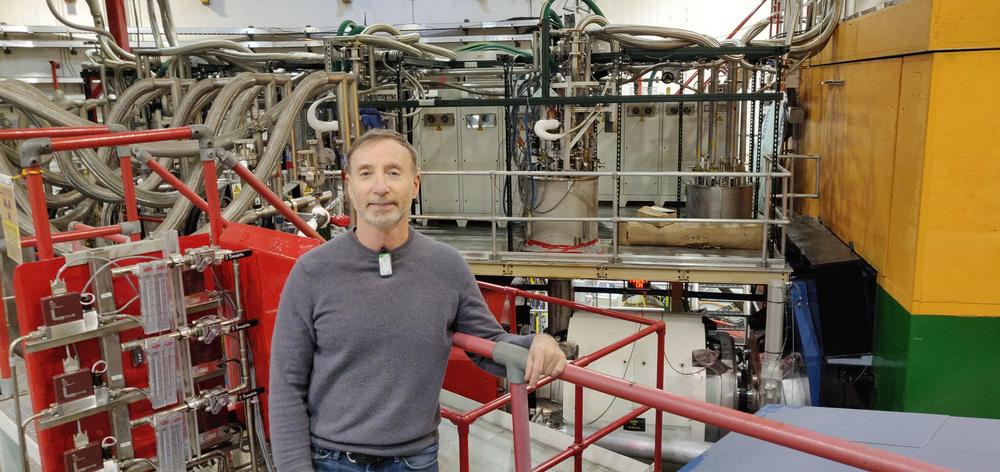
Protons and neutrons, known collectively as nucleons, are made up of even more fundamental constituents called quarks and gluons. While scientists know a great deal about these particles, important questions remain.
“Our knowledge of how quarks and gluons interact to produce the matter we see around us is incomplete,” says Huber, who received an $850,000 Subatomic Physics Discovery Grant over five years for his project Studies of hadronic structure using electromagnetic probes. “One of the obstacles to improved comprehension has been a lack of quality data that can be cleanly interpreted.”
Huber co-leads the ongoing PionLT and KaonLT experiments at the Jefferson Lab in the United States. The experiments use the lab’s high-energy electron beam and high-resolution detectors to probe deeply into the structure of matter.
The work addresses key questions in modern physics, including the origin of hadronic mass, spin, and baryon number. Hadronic mass refers to the mass of particles, such as protons and neutrons, that are made of quarks and gluons.
“Given our group’s experience and well-established track record in the field, paired with Jefferson Lab’s unique and reliable experimental facilities, our planned measurements will yield a wealth of relevant new data,” Huber says. “They will provide deeper insight into the origin of visible mass in the universe.”
The research is collaborative, original, and unique in the world context. While there are no immediate applications foreseen for the work, Huber says the impact of the funding is also felt through the students and early-career researchers who contribute to the project.
“My NSERC funds are primarily used to support University of Regina graduate students and a postdoctoral fellow who are contributing greatly to the success of these experiments,” Huber says.
For Huber, the opportunity to work closely with graduate students over several years is one of the most rewarding aspects of the research. And the relationships often continue well beyond graduation, as Huber supports former students in their future careers.
“I am very honoured that my students nominated me for the University of Regina’s Outstanding Graduate Supervisor award in 2024,” Huber says. “It is a clear recognition of this work.”
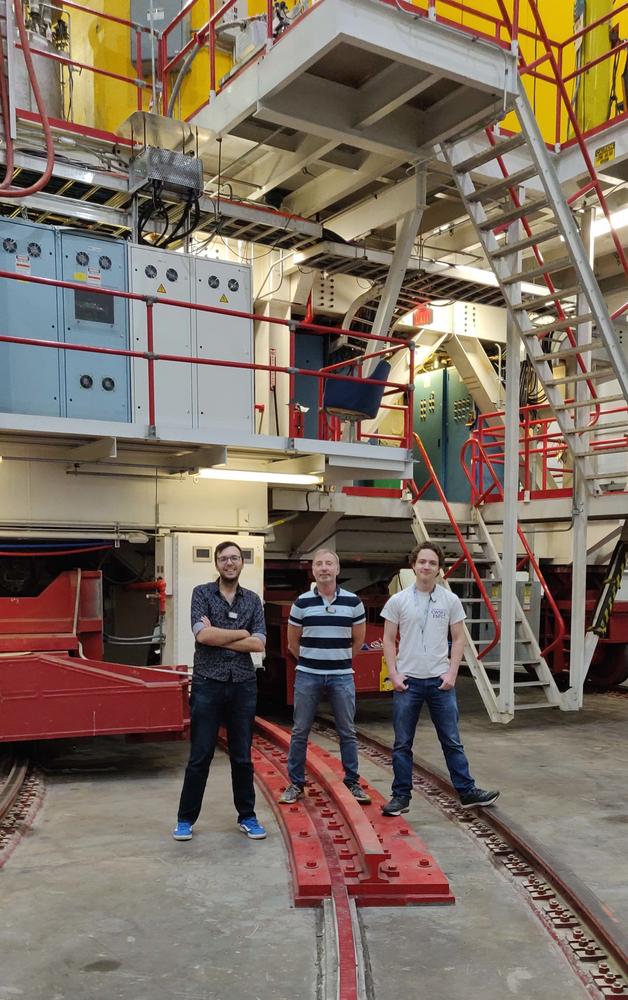
Dr. Garth Huber in Hall C at Jefferson Lab with Stephen Kay, U of R Post-Doctoral Fellow, and Nathan Heinrich, U of R PhD student. (Photo by Jacob Murphy).
Dr. Chris Yost, Vice-President (Research), says that all the U of R’s funded research projects show the breadth of research underway at the University. “Our research addresses urgent environmental questions on the Prairies, explores the foundations of the physical universe, and many other projects in between. Not only is this work helping to create learning opportunities for the next generation of researchers, it’s making an impact here in Saskatchewan and beyond.”
Below is a list of the other University of Regina researchers who received funding as part of the NSERC Discovery Grants Program:
- Ifran Al-Anbagi received $235,000 over five years for his project, Intelligent zero-trust blockchain architectures for securing mission-critical IoT systems
- Mohan Babu received $325,000 over five years for his project, Investigating uncharacterized Escherichia coli proteins implicated in cell division
- Andrew Cameron received $240,000 over five years for his project, Integration into host networks: Transcriptional controls of plasmid persistence and dissemination
- Martin Frankland received $70,000 over five years for his project, Homotopical and homological structures in topology
- Allen Herman received $185,000 over for five years for his project, Algebras and association schemes
- Golam Kabir received $215,000 over for five years for his project, Integrated assessment and optimization of the Canadian CCUS supply chain: A techno-economic, environmental, and risk-resilient approach.
- Dabanjana Kundu received $185,000 over five years, plus $12,500 Early Career Researcher supplemental funding, for her project, Arithmetic of elliptic curves via Iwasawa theory
- Malek Mouhoub received $235,000 over five years for his project, Preference-centric multiple objective optimization for multi-criteria decision making
- Donald Stanley received $170,000 over for five years for his project, Realization of cohomology
- Paitoon Tontiwachwuthikul received $215,000 over five years for his project, Creating the new generation of CO2 capture processes using novel solvent regeneration techniques with designer solvents for Canada's Energy Transition to a Lower Carbon Energy Future
- Mark Vanderwel received $195,000 over five years for his project, Climate- and fire-driven biomass change across Canada's western boreal forest
- Sandra Zilles received $300,000 over five years for her project, Theory of sample-efficient interactive learning
In addition to funds provided by NSERC Discovery Grants, these projects are also supported by the federal Research Support Fund which helps assist with the costs associated with managing the University of Regina’s research enterprise and helping to maintain the University’s world-class research environment.

More than a research trip
Building relationships, solidarity, and Indigenous-led partnerships in Ecuador
Read More
An equitable response
Funding for disaster-planning research includes the voices and needs of diverse communities
Read More