





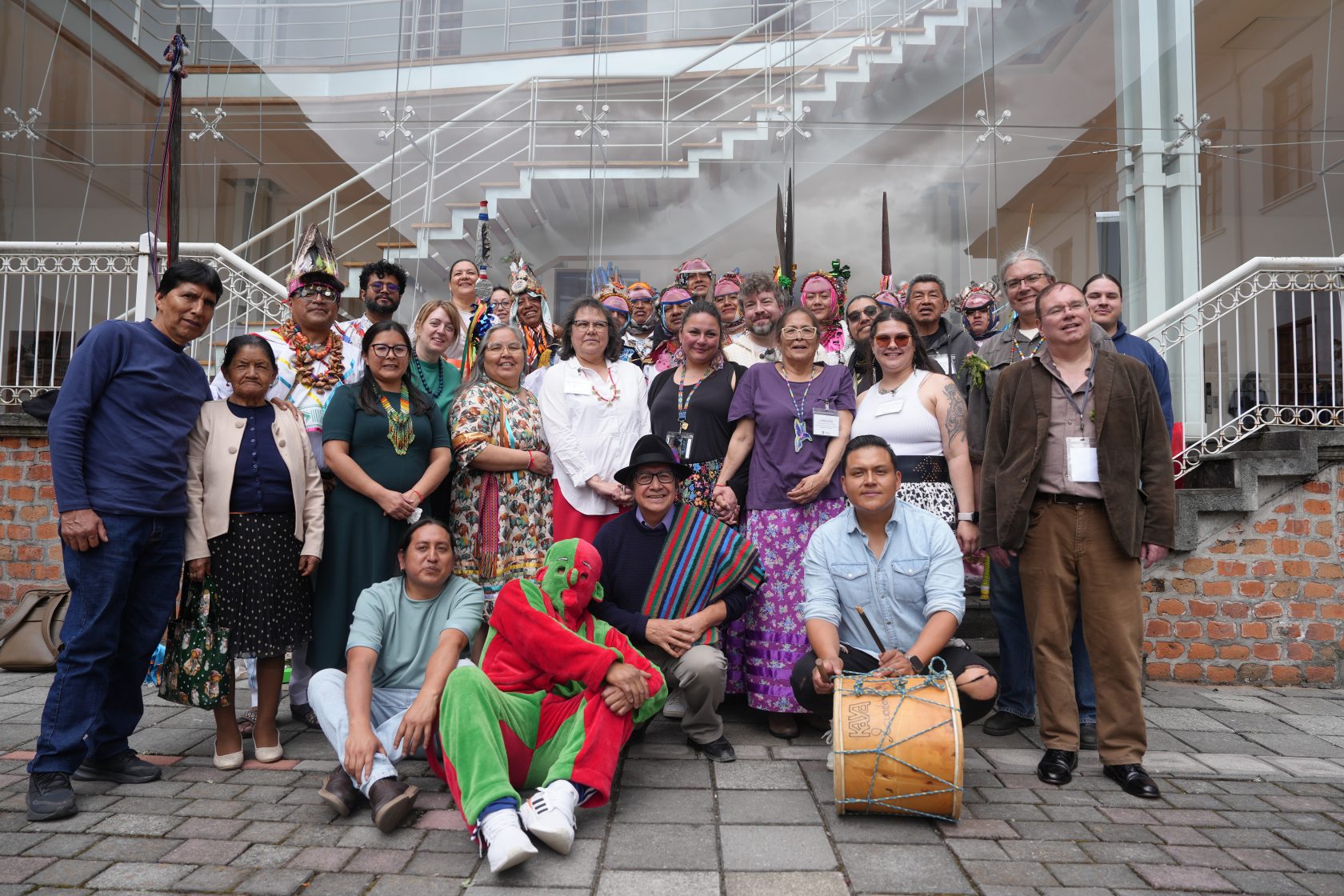
The U of R delegation with the Yumbo people in Quito, Ecuador. (Photo courtesy of Amawtay Wasi University)
What stayed with many participants after the University of Regina’s recent delegation to Ecuador was not a particular meeting, signed agreement, or presentation. It was the feeling of people caring for one another across languages, nations, and territories, and the power of global solidarity among Indigenous researchers.
Over the course of the North-South Dialogues on Indigenous and Decolonial Research in the Americas trip, a 20-member delegation made up of faculty members, Indigenous graduate students, and Elders from the University of Regina and the First Nations University of Canada, connected with nearly 200 Indigenous researchers, Knowledge Keepers, students, and community leaders in Ecuador.
Together, they co-hosted an international academic gathering, signed major partnership agreements, and laid the groundwork for future collaborations.
But the local delegation agreed that the true significance of the trip was about support for one another.
Fulfilling prophesies
For Lorena Cote, an assistant professor of the Saulteaux language at the First Nations University of Canada, learning more about those she was meeting held the greatest significance.
“The beliefs and ways of life of their people is very similar to ours here in Canada,” says Cote. “The ceremonies, the honoring of all life, and learning about their prophecy impacted me the most. As an Anihšināpē person, we also have a prophecy and seeing theirs being fulfilled gives me hope that our prophecy will be fulfilled.”
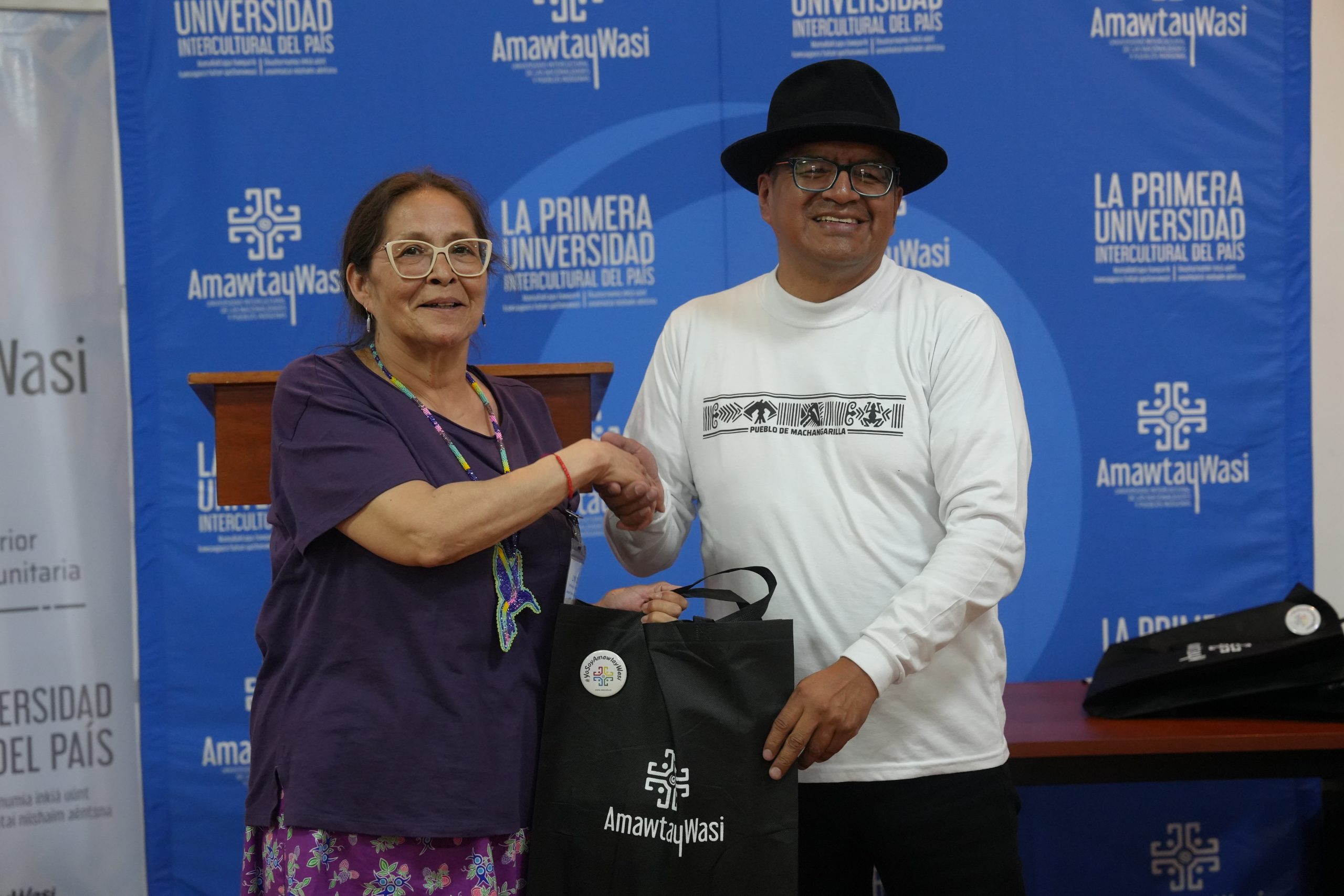
Lorena Cote shakes hands with Dr. Freddy Simbaña, Vice-Rector of Research, Innovation, and Community Engagement at Amawtay Wasi. (Photo courtesy of Amawtay Wasi University)
Cote explains that the Eagle and the Condor prophecy, rooted in the Amazon and Andes, tells of two human societies taking two different paths. The Eagle represents masculinity, the mind, science, industry, and the North, while the Condor represents the feminine, the heart, intuition, spirit, and the South. “The prophecy says that in the 1490s a 500-year period began where the Eagle became powerful, pushing the Condor to the brink of extinction,” says Cote. “A new era began in 1990, bringing the possibility for the Eagle and Condor to reunite, flying together, creating a new era of global consciousness, and brining balance and harmony for all humanity.”
Cote says the Anihšināpē Seven Fires Prophecy is a sacred oral tradition describing seven distinct ‘fires.’ It predicts migration, the arrival of European colonizers, a period of cultural darkness, and the final choice between materialism and spirituality. According to that prophesy, we are now in the Seventh Fire, where a new generation, the oški-pimātišīk, or New People, will emerge and seek out Elders to relearn their cultural ways.
Building Indigenous-led global partnerships
Since July 2024, approximately 14 faculty members from the U of R, First Nations University of Canada, and Luther College have been building relationships with Indigenous communities and institutions in Ecuador. A $25,000 Social Sciences and Humanities Research Council (SSHRC) Connections Grant, led by assistant professor in sociology and social studies Dr. Jorge Vásquez, helped to fund travel for the graduate students and Elders. This all paved the way for the on-the-ground delegation to sign a memorandum of understanding (MOU) with Ecuador’s Amawtay Wasi Indigenous University, a university grounded in ancestral knowledge systems, community learning, and cultural revitalization. Another MOU was signed with Ecuador’s Universidad Tecnológica Equinoccial.
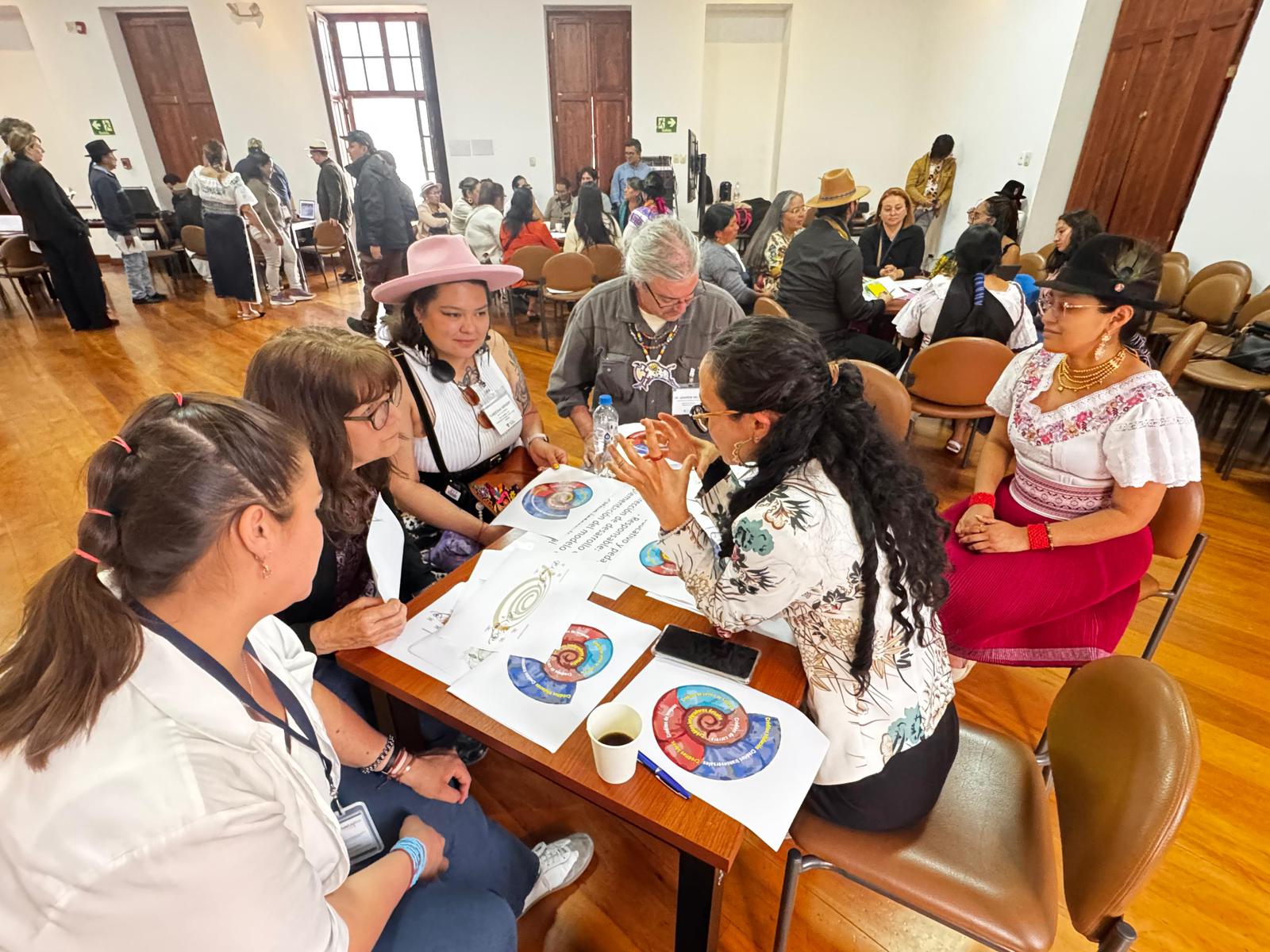
There is also an emerging partnership with the Coordinator of the Indigenous Organizations of the Amazon River Basin, an international Indigenous organization that represents more than 500 Indigenous Peoples across nine Amazonian countries.
Representatives from the Embassy of Canada to Ecuador also joined portions of the visit, reflecting growing international interest in Indigenous-led North-South collaborations.
The formal agreements will help ensure that the relationships built will continue and will pave the way for future opportunities.
“This trip added fuel to my passionate fire for connection, community, and collaboration. While travel to get there may feel long, the time there was enriching, uplifting, and flew by fast,” says Taneesha Herbert, who just finished a double undergraduate degree from First Nations University of Canada in psychology and sociology, with minors in Indigenous Studies and Indigenous Health Studies, and a Certificate of Reconciliation Studies. “I can’t wait to go back to visit, learn, and expand our relationship with our southern relatives! We are stronger together.”
This September Herbert is beginning a master’s degree in sociology at the U of R.
The trip also culminated in a major academic gathering that was co-hosted with Amawtay Wasi Indigenous University.
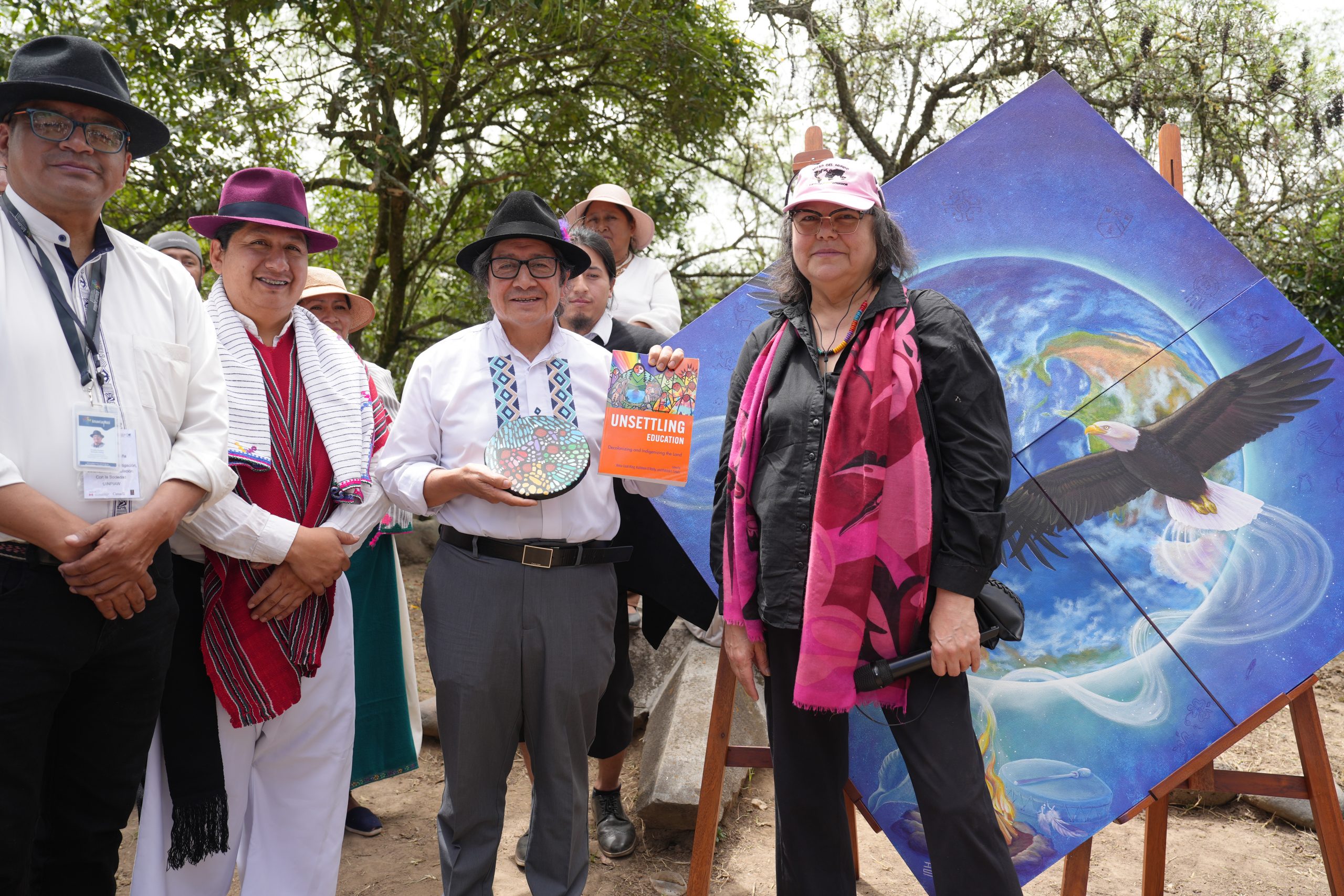
For Dr. Anna-Leah King, the U of R's Indigenous Chair for the Faculty of Education and Chair of the Reconciliation Action Committee for the University, the highlight of the trip was the opening ceremony.
“I loved the welcoming from the Mamas of Association of Kichwa Midwives of the Upper Napo (AMUPAKIN), an Indigenous women-led organization from the Amazon who treated us in a loving and appreciative way. We are not used to this in Canada,” says King. “The panel discussions and presentations from Amawtay Wasi university at the academic conference were great as well. I also loved being taken to the hummingbirds and feeding them.”
King also contributed $8,000 from her Indigenous Research Award toward funding the trip for the students and toward relationship building – which included providing gifts from the University. She also presented at the conference and says the panel dialogue she was a part of aimed to create a critical and comparative space for exploring Indigenization experiences in Canadian education and intercultural education in Ecuador, analyzing historical trajectories, epistemological foundations, and political conditions of institutionalization.
Looking ahead
Organizers hope the momentum from the delegation continues to grow through future exchanges, collaborative research, and expanded opportunities for students and communities.
They also hope the story encourages others to imagine research differently, as a process grounded in reciprocity, responsibility, and human connection.
To learn more about this journey and future initiatives for international Indigenous research engagement at the University of Regina, please contact Veronica Santafe at research.engagement@uregina.ca.

Three minutes to make you care
Three minutes. One slide. Eight finalists.
Read More

From Prairie wetlands to the building blocks of matter
U of R researchers receive close to $3 million in federal funding
Read More